We Use CookiesWe use cookies to enhance the security, performance, functionality and for analytical and promotional activities. By continuing to browse this site you are agreeing to our privacy policy

10 Best Audio Interfaces 2025 in the United States

How do we rank products for you?

Our technology thoroughly searches through the online shopping world, reviewing hundreds of sites. We then process and analyze this information, updating in real-time to bring you the latest top-rated products. This way, you always get the best and most current options available.

headphones-stars

Our Top Picks

#1

Winner

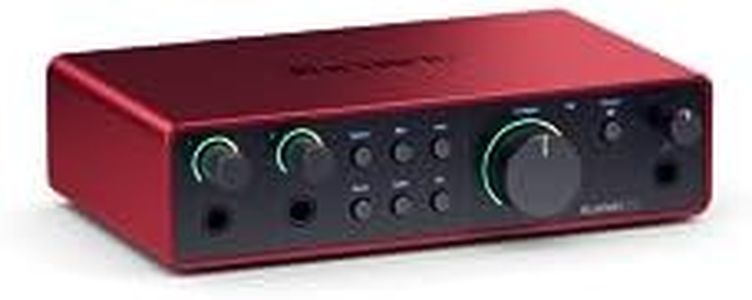
Focusrite Scarlett 2i2 4th Gen USB Audio Interface for Recording, Songwriting, Streaming and Podcasting — High-Fidelity, Studio Quality Recording, and All the Software You Need to Record

Rating
10.0
Chosen by1,335
Latency
Preamp Quality
Build Quality and Portability

Most important from
32942 reviews

Latency
Latency is impressively low, allowing seamless real-time monitoring with no noticeable delay, which greatly enhances recording quality and interaction.
Preamp Quality
Built-in preamps deliver clean, transparent sound, and the Air mode brightens vocals and guitars, making recordings sound more polished and professional.
Build Quality and Portability
The interface’s solid aluminum body feels premium and durable, with physical volume knobs providing intuitive, tactile control over inputs and headphone levels.
Software and Compatibility
Included software like Pro Tools and FL Studio offers a great starting point for music production, supporting smooth setup and creative workflows.
Audio Quality (Bit Depth and Sample Rate)
Sound quality stands out as excellent for the price, handling music playback, MIDI control, and recording with clarity and detail.
Connectivity
The USB-C connection is versatile, though the included USB-A to USB-C cable is a minor inconvenience compared to a USB-C to USB-C option.

The Focusrite Scarlett 2i2 4th Gen is a solid choice for anyone looking to record or stream with professional-sounding quality without needing complicated gear. It offers 2 inputs and 2 outputs, which suits solo musicians, podcasters, and small setups. The audio quality is impressive, featuring a 120dB dynamic range and the same converters used in top studio equipment, ensuring clear, detailed sound. Its USB-C connection makes it easy to plug into most computers and even some tablets and smartphones, offering good versatility. It provides phantom power for condenser microphones, which is essential for many vocal and instrument mics.

The built-in preamps are highly regarded, delivering clean and transparent sound with an added “Air” mode that brightens vocals and guitars for a more polished result. Latency is kept low, so you won’t notice delays while recording or performing live. The unit’s aluminum body is compact and sturdy, making it portable and durable for home or on-the-go use. One big plus is the included software bundle, which gives you popular recording programs and plugins to get started right away without extra purchases.

On the downside, with only 2 inputs, it’s less suitable if you plan to record multiple sources simultaneously or larger bands. Also, while the USB 2.0 interface is reliable, it’s not the fastest standard available, though this rarely impacts typical home recording. The Scarlett 2i2 4th Gen delivers excellent sound quality, user-friendly features, and decent portability, making it among the best options for beginner to intermediate audio interfaces aimed at recording, streaming, and songwriting.

Rating
10.0
Chosen by1,335
Latency
Preamp Quality
Build Quality and Portability

Most important from
32942 reviews

Latency
Latency is impressively low, allowing seamless real-time monitoring with no noticeable delay, which greatly enhances recording quality and interaction.
Preamp Quality
Built-in preamps deliver clean, transparent sound, and the Air mode brightens vocals and guitars, making recordings sound more polished and professional.
Build Quality and Portability
The interface’s solid aluminum body feels premium and durable, with physical volume knobs providing intuitive, tactile control over inputs and headphone levels.
Software and Compatibility
Included software like Pro Tools and FL Studio offers a great starting point for music production, supporting smooth setup and creative workflows.
Audio Quality (Bit Depth and Sample Rate)
Sound quality stands out as excellent for the price, handling music playback, MIDI control, and recording with clarity and detail.
Connectivity
The USB-C connection is versatile, though the included USB-A to USB-C cable is a minor inconvenience compared to a USB-C to USB-C option.
#2

Focusrite Scarlett Solo 3rd Gen USB Audio Interface for Guitarists, Vocalists, Podcasters or Producers to record and playback studio quality sound

Rating
7.6
Number of Inputs and Outputs
Audio Quality (Bit Depth and Sample Rate)
Connectivity

Most important from
32942 reviews

Number of Inputs and Outputs
Handles output and input exceptionally well, making it versatile for various setups.
Audio Quality (Bit Depth and Sample Rate)
Perfect for vocal lessons, providing clear and consistent audio quality without unexpected effects.
Connectivity
Works seamlessly on Linux with kernel 6.8+ and supports community-made projects for enhanced functionality.
Phantom Power
No need for an external power adapter, reducing noise and improving reliability in various scenarios.
Preamp Quality
Low noise levels are comparable to higher-grade models, offering impressive performance for the price.
Build Quality and Portability
Excellent build quality with low noise and distortion, meeting manufacturer specifications without inflated claims.
Software and Compatibility
Allows for custom setups and advanced configurations, including double, triple, and quadruple amping the microphone.

The Focusrite Scarlett Solo 3rd Gen USB Audio Interface is a solid choice for musicians, podcasters, and producers looking for high-quality audio recording in a compact package. One of its standout features is the impressive audio quality, capable of 24-bit/192kHz recording, ensuring your projects sound professional. The built-in high-performance mic pre-amps, along with the switchable Air mode, add clarity to recordings, making it especially beneficial for vocalists and acoustic instrument players. The interface also boasts two instrument inputs with Gain Halos, preventing distortion and ensuring clear sound capture.

In terms of connectivity, the USB-C interface is convenient and compatible with various operating systems, including Windows, Mac OS, and iOS, which opens the door for diverse usage scenarios. The low-noise balanced outputs deliver crystal-clear playback, allowing you to appreciate every detail in your mixes. Additionally, the included Easy Start tool helps users quickly set up their recording environment, which is great for beginners.

The Scarlett Solo has its limitations. It only offers two inputs, meaning it may not be ideal for users needing to record multiple instruments or voices simultaneously. While it provides high-quality sound, some users may desire more advanced features or additional inputs as they progress in their audio journey. The portability, while decent, may not be suitable for heavy use in rugged environments. Another potential drawback is the reliance on software compatibility for full functionality, which may be challenging for those unfamiliar with audio recording programs. However, the three-year warranty gives peace of mind for potential hardware issues. The Focusrite Scarlett Solo 3rd Gen is a fantastic option for those starting in audio recording, providing excellent quality and ease of use, but may not fully meet the needs of more advanced users.

Rating
7.6
Number of Inputs and Outputs
Audio Quality (Bit Depth and Sample Rate)
Connectivity

Most important from
32942 reviews

Number of Inputs and Outputs
Handles output and input exceptionally well, making it versatile for various setups.
Audio Quality (Bit Depth and Sample Rate)
Perfect for vocal lessons, providing clear and consistent audio quality without unexpected effects.
Connectivity
Works seamlessly on Linux with kernel 6.8+ and supports community-made projects for enhanced functionality.
Phantom Power
No need for an external power adapter, reducing noise and improving reliability in various scenarios.
Preamp Quality
Low noise levels are comparable to higher-grade models, offering impressive performance for the price.
Build Quality and Portability
Excellent build quality with low noise and distortion, meeting manufacturer specifications without inflated claims.
Software and Compatibility
Allows for custom setups and advanced configurations, including double, triple, and quadruple amping the microphone.
#3

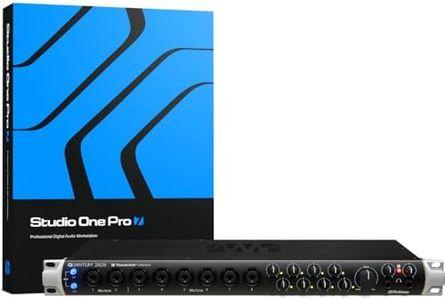
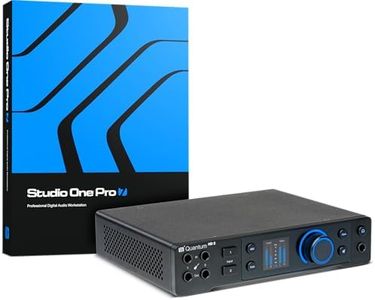
PreSonus Quantum HD 2 20 x 24, 32-bit / 192 kHz USB-C Audio Interface With Studio One Pro Software

Rating
7.3
Audio Quality (Bit Depth and Sample Rate)
Preamp Quality
Latency

Most important from
398 reviews

Audio Quality (Bit Depth and Sample Rate)
The audio clarity and dynamics are outstanding, offering a major upgrade over older interfaces with noticeably superior sound detail.
Preamp Quality
The preamps deliver full-bodied, quiet performance even at high gain, providing clean, dynamic inputs ideal for vocals and instruments alike.
Latency
Despite the lack of direct hardware monitoring, latency remains very low thanks to Thunderbolt 3 connectivity, supporting real-time recording with minimal delay.
Build Quality and Portability
Build quality feels robust and well-designed, with solid volume knobs and a secure twist-lock power connector that prevents accidental disconnections.
Connectivity
Expandable via ADAT optical ports, the interface provides versatile routing options for growing studio setups.
Software and Compatibility
The included Studio One Pro software is a valuable addition, offering a perpetual license and good integration, though documentation could better explain some features like loopback setup.

The PreSonus Quantum HD 2 is a solid choice if you're looking for a professional-level audio interface with plenty of inputs and outputs—20 channels in total, which is great for handling multiple microphones or instruments at once. It supports very high audio quality with 32-bit depth and up to 192 kHz sample rate, meaning your recordings can be very clear and detailed. Using USB-C connectivity, it offers fast and reliable data transfer, which helps keep latency (the delay between playing and hearing sound) very low. This makes it easier to record in real-time without annoying lag.

The interface includes two high-quality MAX-HD mic preamps with up to +75 dB gain, which are designed to be transparent and low-noise, suitable for a wide range of microphones. There's also phantom power for condenser mics and handy features like Auto Gain to set levels automatically. Guitarists and bassists will appreciate the instrument input co-developed with Fender, plus re-amp outputs let you experiment with your sound by running recordings back through amps and pedals. The build is reasonably portable and durable, weighing under 3 pounds, so it can fit into home or project studios easily.

It also comes with Studio One Pro software and works well with many popular digital audio workstations like Ableton Live, Pro Tools, and Logic Pro, offering good versatility. On the downside, while the number of inputs is high, only two of the mic preamps may limit users who need more high-quality mic inputs simultaneously. Also, its price and complexity might be more than what casual or beginner users need. For those seeking a powerful, low-latency interface with professional-grade sound and flexible software options, the Quantum HD 2 is a strong contender, especially for serious home or project studio musicians and producers.

Rating
7.3
Audio Quality (Bit Depth and Sample Rate)
Preamp Quality
Latency

Most important from
398 reviews

Audio Quality (Bit Depth and Sample Rate)
The audio clarity and dynamics are outstanding, offering a major upgrade over older interfaces with noticeably superior sound detail.
Preamp Quality
The preamps deliver full-bodied, quiet performance even at high gain, providing clean, dynamic inputs ideal for vocals and instruments alike.
Latency
Despite the lack of direct hardware monitoring, latency remains very low thanks to Thunderbolt 3 connectivity, supporting real-time recording with minimal delay.
Build Quality and Portability
Build quality feels robust and well-designed, with solid volume knobs and a secure twist-lock power connector that prevents accidental disconnections.
Connectivity
Expandable via ADAT optical ports, the interface provides versatile routing options for growing studio setups.
Software and Compatibility
The included Studio One Pro software is a valuable addition, offering a perpetual license and good integration, though documentation could better explain some features like loopback setup.

Buying Guide for the Best Audio Interfaces

Choosing the right audio interface is crucial for anyone involved in music production, podcasting, or any form of audio recording. An audio interface is a device that connects your instruments, microphones, and other audio gear to your computer, converting analog signals into digital data that your computer can process. To find the best fit for your needs, you should consider several key specifications. Understanding these specs will help you make an informed decision and ensure that your audio interface meets your specific requirements.
Number of Inputs and OutputsThe number of inputs and outputs on an audio interface determines how many devices you can connect simultaneously. Inputs are used for connecting microphones, instruments, and other audio sources, while outputs are for connecting speakers, headphones, and other monitoring equipment. If you are a solo musician or podcaster, a 2-in/2-out interface might be sufficient. However, if you plan to record a band or multiple sources at once, you may need an interface with more inputs and outputs, such as 8-in/8-out or higher. Consider your current and future needs when deciding on the number of inputs and outputs.
Audio Quality (Bit Depth and Sample Rate)Audio quality is determined by the bit depth and sample rate of the audio interface. Bit depth affects the dynamic range of your recordings, with higher bit depths providing more detail and less noise. Common bit depths are 16-bit, 24-bit, and 32-bit. Sample rate refers to how many times per second the audio is sampled, with higher sample rates capturing more detail. Common sample rates are 44.1kHz, 48kHz, 96kHz, and 192kHz. For most home studios, a 24-bit/48kHz interface is sufficient, but if you require the highest quality recordings, consider an interface with higher bit depth and sample rate.
ConnectivityThe type of connectivity an audio interface offers determines how it connects to your computer. Common connection types include USB, Thunderbolt, and FireWire. USB interfaces are widely compatible and suitable for most users. Thunderbolt interfaces offer faster data transfer rates and lower latency, making them ideal for professional studios and users with high-performance needs. FireWire is less common but still used in some professional settings. Choose an interface with a connection type that is compatible with your computer and meets your performance requirements.
Phantom PowerPhantom power is a feature that supplies power to condenser microphones, which require an external power source to operate. If you plan to use condenser microphones, ensure that your audio interface has phantom power (usually +48V). This feature is essential for capturing high-quality vocal and instrument recordings. If you only use dynamic microphones, which do not require phantom power, this feature may not be as important.
LatencyLatency refers to the delay between the input signal (e.g., your voice or instrument) and the output signal (e.g., what you hear in your headphones). Low latency is crucial for real-time monitoring and recording, as high latency can be distracting and make it difficult to perform. Look for an audio interface with low-latency drivers and direct monitoring features to minimize delay. If you are a musician or podcaster who needs to monitor your recordings in real-time, prioritize interfaces with low latency.
Preamp QualityPreamps amplify the signal from your microphones and instruments before it is converted to digital data. The quality of the preamps in an audio interface can significantly impact the clarity and warmth of your recordings. High-quality preamps provide clean, transparent amplification with minimal noise. If you are recording vocals or acoustic instruments, prioritize interfaces with high-quality preamps. For basic recording needs, standard preamps may suffice, but for professional-quality recordings, invest in an interface with superior preamp quality.
Build Quality and PortabilityThe build quality and portability of an audio interface are important considerations, especially if you plan to use it in different locations or on the go. A robust, well-built interface will withstand the rigors of travel and frequent use. If you need a portable solution, look for a compact and lightweight interface that is easy to transport. For a stationary setup, build quality is still important, but portability may be less of a concern. Consider your usage scenario and choose an interface that matches your durability and portability needs.
Software and CompatibilityMany audio interfaces come with bundled software, such as digital audio workstations (DAWs), plugins, and virtual instruments. This software can add significant value and enhance your recording capabilities. Ensure that the interface is compatible with your preferred DAW and operating system (Windows, macOS, etc.). Check for driver support and updates from the manufacturer to ensure smooth operation. If you are new to recording, bundled software can provide a great starting point, while experienced users may prioritize compatibility with their existing setup.

FAQ