We Use CookiesWe use cookies to enhance the security, performance, functionality and for analytical and promotional activities. By continuing to browse this site you are agreeing to our privacy policy

10 Best Beginner Piano Keyboard 2025 in the United States

How do we rank products for you?

Our technology thoroughly searches through the online shopping world, reviewing hundreds of sites. We then process and analyze this information, updating in real-time to bring you the latest top-rated products. This way, you always get the best and most current options available.

headphones-stars

Our Top Picks

#1

Winner

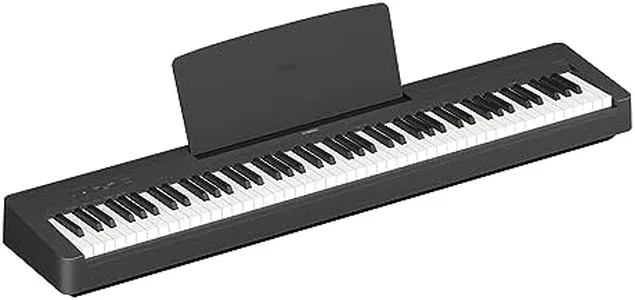
Yamaha Weighted Action 88-Key Digital Piano , Includes Power Adapter and Sustain Foot Switch

Rating
10.0
Chosen by1,350
Key Action
Touch Sensitivity
Built-in Learning Tools

Most important from
2000 reviews

Key Action
The Graded Hammer Action keys respond with nuanced weight and sensitivity, closely mimicking the resistance of an acoustic piano.
Touch Sensitivity
The touch sensitivity offers a wide range of dynamics, providing nearly the same flexibility as a real piano.
Built-in Learning Tools
The piano's metronome and ability to layer different voices or split the keyboard open up creative possibilities.
Connectivity Options
Bluetooth connectivity allows for effortless music playback or integration with learning apps.
Portability
The compact size and sleek design make it ideal for smaller spaces while retaining the elegance of a traditional piano.

The Yamaha P143B is an excellent choice for beginners looking for a digital piano that closely mimics the feel and sound of an acoustic piano. With 88 keys that feature weighted hammer action, it provides a realistic touch, helping new players develop proper finger strength and technique. The sound quality is another strong point, as it offers premium grand piano tones with natural resonance, making practice sessions enjoyable.

Portability is catered for with its slim and lightweight design, which means you can easily move it around your home or take it with you when traveling. The built-in speakers allow for a more immersive experience, while the headphone jack is useful for quiet practice. Additionally, its one-button controls and built-in learning tools simplify the learning process, making it accessible for all skill levels.

There are a few drawbacks to consider. While it includes various sound voices, it may not have as extensive a range of sounds as some more advanced digital pianos. The polyphony is standard but could limit more complex pieces, especially as you progress. Also, the reliance on corded electric power can be a limitation for those wanting to play without being tethered to an outlet.

Rating
10.0
Chosen by1,350
Key Action
Touch Sensitivity
Built-in Learning Tools

Most important from
2000 reviews

Key Action
The Graded Hammer Action keys respond with nuanced weight and sensitivity, closely mimicking the resistance of an acoustic piano.
Touch Sensitivity
The touch sensitivity offers a wide range of dynamics, providing nearly the same flexibility as a real piano.
Built-in Learning Tools
The piano's metronome and ability to layer different voices or split the keyboard open up creative possibilities.
Connectivity Options
Bluetooth connectivity allows for effortless music playback or integration with learning apps.
Portability
The compact size and sleek design make it ideal for smaller spaces while retaining the elegance of a traditional piano.
#2

Yamaha 61-Key Portable Keyboard for Beginners with Learning Tools, Music Rest and Power Adapter PSRE283

Rating
9.1
Touch Sensitivity

Most important from
659 reviews

Touch Sensitivity
Just a fantastic keyboard with great sound and so many features along with Touch Sensitive keys. Yamaha quality really stands out.

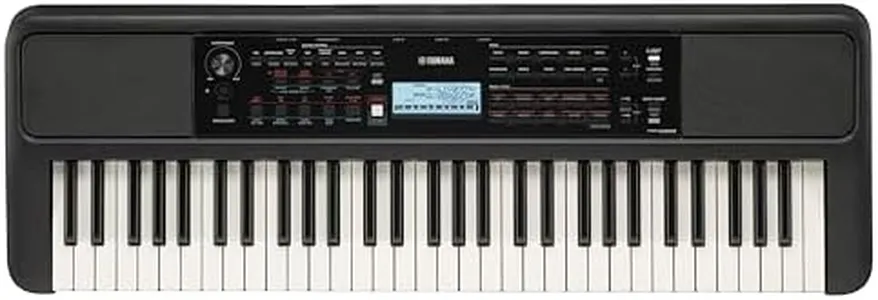
The Yamaha PSR-E283 keyboard is designed specifically for beginners. It features 61 full-sized keys, which is ideal for those starting out and helps develop proper playing techniques. The keys are nicely sized, making the transition to more advanced keyboards smoother later on. It lacks advanced key actions like weighted keys or hammer action, which might limit the feel of a traditional piano experience.

The PSR-E283 excels in built-in learning tools such as Quiz Mode for ear training and Smart Chord for easy chord playing, making it a valuable educational tool for beginners. The keyboard also comes with built-in songs that range from popular hits to classics, catering to a wide age range. Connectivity options include a headphone jack, auxiliary input, and USB connector, which are great for private practice and connecting to other devices.

The portability is another strong point, weighing only 8.8 pounds and having a compact size, making it easy to move around and store. The inclusion of a music rest and power adapter adds value, ensuring you have everything needed to start playing immediately. The Yamaha PSR-E283 is well-suited for beginners with its educational features and ease of use, though those seeking more advanced touch sensitivity and key action may need to look for higher-end models.

Rating
9.1
Touch Sensitivity

Most important from
659 reviews

Touch Sensitivity
Just a fantastic keyboard with great sound and so many features along with Touch Sensitive keys. Yamaha quality really stands out.
#3

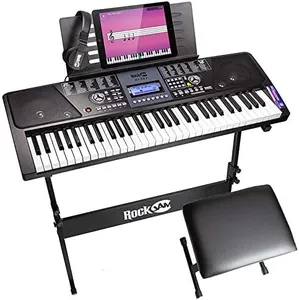
Donner 61 Key Keyboard Piano, Electric Piano Keyboard Kit with 249 Voices, 249 Rhythms - Includes Piano Stand, Stool, Microphone, Gift for Beginners, Black (DEK-610S)

Rating
8.8
Key Action
Touch Sensitivity
Built-in Learning Tools

Most important from
4267 reviews

Key Action
The tone and key strike action are reflective of a standalone piano, making it perfect for young learners eager to master lessons and experiment with sounds and rhythms.
Touch Sensitivity
While the keys are not pressure-sensitive or weighted, and some sounds are very similar, the overall durability and teaching features make it a good choice for beginners.
Built-in Learning Tools
While the keys are not pressure-sensitive or weighted, and some sounds are very similar, the overall durability and teaching features make it a good choice for beginners.
Connectivity Options
Despite some issues with the stand's stability and the microphone's quality, the keyboard itself is versatile and fun, with good sound quality and multiple ports for connectivity.

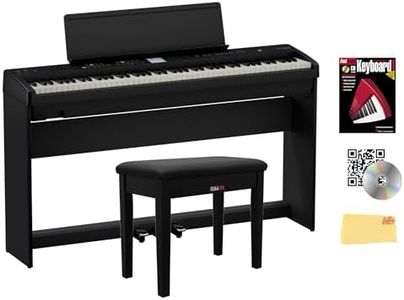
The Donner 61 Key Keyboard Piano (DEK-610S) is a comprehensive kit designed for beginners. It includes a keyboard stand, adjustable bench, sheet music stand, microphone, and power adapter, making it a convenient all-in-one package. With 61 keys, this keyboard provides a standard range suitable for new learners. While the key action and touch sensitivity are not specified, it features 32-note polyphony, which is decent for beginners, allowing for smooth play without losing notes when playing chords or using the sustain pedal.

The inclusion of 249 voices and 249 rhythms offers a wide variety of sounds to explore, enhancing creative potential. Built-in learning tools, including 50 demo songs and three teaching functions, make it easier for beginners to practice and improve their skills. The record function is a handy feature for monitoring progress, and the headphone jack allows for private practice sessions. Connectivity options include auxiliary input, adding versatility for connecting external devices.

Weighing 23.5 pounds and designed with a slim body, this keyboard is portable enough for both home and on-the-go use. The built-in 10W speakers provide adequate sound quality for small spaces. Although the lack of detailed information on key action and touch sensitivity might be a concern for some users, and the polyphony could be limiting for more complex pieces, the user-friendly HD display and a good balance of features make this keyboard ideal for beginners looking to explore and develop their musical skills.

Rating
8.8
Key Action
Touch Sensitivity
Built-in Learning Tools

Most important from
4267 reviews

Key Action
The tone and key strike action are reflective of a standalone piano, making it perfect for young learners eager to master lessons and experiment with sounds and rhythms.
Touch Sensitivity
While the keys are not pressure-sensitive or weighted, and some sounds are very similar, the overall durability and teaching features make it a good choice for beginners.
Built-in Learning Tools
While the keys are not pressure-sensitive or weighted, and some sounds are very similar, the overall durability and teaching features make it a good choice for beginners.
Connectivity Options
Despite some issues with the stand's stability and the microphone's quality, the keyboard itself is versatile and fun, with good sound quality and multiple ports for connectivity.

Buying Guide for the Best Beginner Piano Keyboard

Choosing the right beginner piano keyboard can be a fun and rewarding experience. The right keyboard will help you learn and enjoy playing music, so it's important to consider a few key specifications to ensure you get the best fit for your needs. Here are some important factors to consider when selecting a beginner piano keyboard.
Number of KeysThe number of keys on a keyboard can range from 25 to 88. For beginners, a keyboard with 61 keys is often recommended as it provides a good range for learning most songs without being too overwhelming. If you plan to advance to more complex pieces, an 88-key keyboard, which is the standard for acoustic pianos, might be a better long-term investment. However, if portability is a priority, a smaller keyboard with 49 keys might be more suitable.
Key ActionKey action refers to how the keys respond when pressed. There are three main types: non-weighted, semi-weighted, and fully weighted (hammer action). Non-weighted keys are lighter and easier to press, making them suitable for young children or absolute beginners. Semi-weighted keys offer a bit more resistance, providing a more piano-like feel. Fully weighted keys mimic the feel of an acoustic piano and are ideal for those who want to develop proper finger strength and technique. Consider your long-term goals and physical comfort when choosing the key action.
Touch SensitivityTouch sensitivity means the keyboard responds to the force with which you press the keys, producing louder or softer sounds accordingly. This feature is important for developing expressive playing skills. Keyboards with adjustable touch sensitivity allow you to customize the response to suit your playing style. For beginners, having touch sensitivity can help in learning dynamics and expression, making it a valuable feature to look for.
PolyphonyPolyphony refers to the number of notes a keyboard can produce at the same time. A higher polyphony count allows for more complex and sustained sounds. For beginners, a polyphony of 32 to 64 notes is usually sufficient. However, if you plan to play more intricate pieces or use the sustain pedal frequently, a higher polyphony count (128 or more) will ensure that notes do not cut off unexpectedly.
Built-in Learning ToolsMany beginner keyboards come with built-in learning tools such as lesson modes, light-up keys, and metronomes. These features can be incredibly helpful for self-teaching and keeping practice sessions engaging. Look for keyboards that offer step-by-step lessons, song libraries, and interactive features to support your learning journey. These tools can make the learning process more enjoyable and effective.
Connectivity OptionsConnectivity options like USB, MIDI, and headphone jacks can enhance your learning experience. USB and MIDI connections allow you to connect the keyboard to a computer or tablet for use with music software and online lessons. Headphone jacks are essential for practicing quietly without disturbing others. Consider what additional equipment you might use and choose a keyboard with the appropriate connectivity options to support your needs.
PortabilityPortability is an important factor if you plan to move your keyboard frequently or have limited space. Lightweight and compact keyboards are easier to transport and store. However, more portable models might compromise on features like key action and polyphony. Balance your need for portability with the essential features you require to ensure you get a keyboard that fits your lifestyle and learning goals.

FAQ