10 Best Hay Moisture Testers 2026 in the United States


Related Products
Up to 6% off




Our technology thoroughly searches through the online shopping world, reviewing hundreds of sites. We then process and analyze this information, updating in real-time to bring you the latest top-rated products. This way, you always get the best and most current options available.

Our Top Picks
Winner
Agratronix BHT-2 Advanced Baler-Mounted Hay Moisture Tester
Most important from
60 reviews
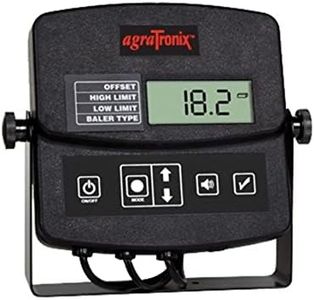
The Agratronix BHT-2 Advanced Baler-Mounted Hay Moisture Tester is designed for farmers and agricultural professionals who need accurate moisture readings to ensure quality hay. One of its notable strengths is the multi-sensor technology, which provides readings from both sides of the bale and through it, enhancing accuracy. The average readings are updated every 2 to 3 seconds, allowing users to monitor moisture levels in real time, which is essential for preventing spoilage.
The large LCD display is another plus, making it easy to view results in various lighting conditions, whether it's day or night. Users can also set their own moisture limits, which adds a layer of customization and helps in making quick decisions about the hay's condition.
There are a few drawbacks to consider. While the moisture range and accuracy are good, some users might expect even higher precision, particularly for critical applications. Additionally, the product's age, first available in 2012, may raise concerns about its longevity and advancements in technology compared to newer models. Moreover, since it does not come with batteries included, users will need to prepare for that extra cost. Durability is acceptable with its ABS material construction, but practical use in demanding agricultural environments might challenge its resilience over time. The Agratronix BHT-2 is a solid option for those needing reliable hay moisture readings, offering user-friendly features and good performance, though potential buyers should weigh its limitations against their specific needs.
Most important from
60 reviews
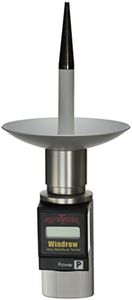
John Deere Windrow Hay Moisture Tester - SW07140
The John Deere Windrow Hay Moisture Tester (model SW07140) is a reliable tool specifically designed for measuring the moisture content in hay. This is crucial for farmers and agricultural professionals who need to ensure their hay is at the optimal moisture level for storage and use. One of the significant strengths of this tester is its reputable brand, John Deere, which is known for durable and high-quality agricultural equipment.
It features an industrial solid wheel type, which implies it is built to withstand tough conditions, contributing to its durability. Additionally, its lower ranking in the Best Sellers list suggests it's not widely used compared to other moisture testers, which might affect the general perception of its effectiveness.
This hay moisture tester seems to be a solid choice for those looking for durable and reliable equipment, especially if they trust the John Deere brand, but prospective buyers might need to seek more detailed specifications to ensure it meets all their needs.
Delmhorst - TECHCHECK-PLUS TECHCHECK Moisture Meter, Basic Package
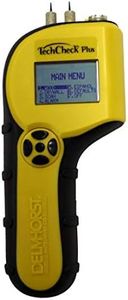
The Delmhorst TECHCHECK-PLUS Moisture Meter is well-suited for hay moisture testing, offering a good balance of features that meet the needs of users, especially farmers and agricultural professionals. One of its main strengths is its bright, clear digital display, making it easy to read measurements, even in various lighting conditions. The meter provides an impressive moisture range of 0.1% to 60%, ensuring it can effectively measure moisture content in both drywall and wood, which is helpful for users who might also be dealing with different materials. The scan mode allows for quick assessments over a broad range, which could be beneficial when testing large bales of hay or other agricultural products.
However, there are some limitations to consider. The integral contact pins, while useful for direct penetration, only offer a 5/16” depth, which may limit the reading's accuracy in denser materials. Additionally, the device operates on a 9-volt battery, which could require frequent replacements depending on usage frequency. Also, while the device's build quality is reasonable, it may not be as rugged as some users might prefer for harsh outdoor conditions, particularly in agricultural settings.
The Delmhorst TECHCHECK-PLUS is a reliable tool for anyone involved in hay moisture testing, balancing ease of use with functional features. Be aware of its limitations regarding penetration depth and potential battery life to ensure it fits your needs effectively.